ISO Implementation
The implementation of an ISO-based Management System (QMS) can be time-consuming and challenging for someone without experience with this process.
A Company’s Quality Management System encompasses all processes that affect the quality of its services or products.
Therefore, it is essential to have a very thorough understanding of the principles and clauses of the relevant ISO standard. This will ensure that the QMS implemented in the Company is effective, suitable for the Company’s needs, and compliant with the ISO standard requirements.
As a company dedicated to providing value-added services on ISO MS, LinSHEQ’s combination of knowledge, basic technology, and hands-on SHEQ experience simplifies the entire process.
INTEGRATED MANAGEMENT SYSTEM



This Includes:
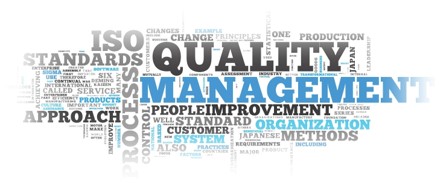
WHAT IS A ISO 9001 QUALITY MANAGEMENT SYSTEM (QMS)?
A quality management system (QMS) is a formalized system that documents processes, procedures, and responsibilities for achieving consistent product or service delivery. A QMS helps coordinate and direct an organization’s activities to meet customer and regulatory requirements and improve its effectiveness and efficiency on a continuous basis. The QMS needs to be specific to the nature of your business, so it is important to tailor it to your needs. ISO 9001 provides general guidelines for what a good QMS must address.
The main clauses are:
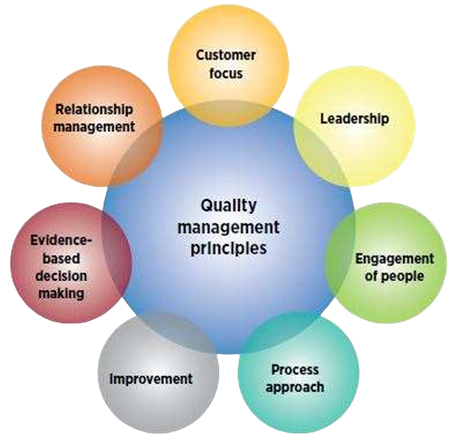
It should be noted that the main clauses, as well as their requirements, are not based on Wishlists or theoretical applications. It is more likely that they reflect sound business principles that are addressed to a certain degree in any successful Company.
If the requirements of ISO 9001 were summarized into five requirements, they would be:
WHAT IS ISO 45001: 2018 MANAGEMENT SYSTEM (QMS)?
The new international standard for Health and Safety (OH&S) Management system
It’s the first-ever international standard for Health and Safety Management. It forms part of the ISO management systems series, e.g. ISO 9001 (Quality), ISO 14001 (Environment) and ISO 27001 (Information Security)
It replaces OHSAS 18001 (Occupational health and safety assessment series)
ISO 45001 is the standard that provides a framework for an organization to manage risks and opportunities to help prevent work-related injuries and ill health to workers. The intended outcome is to improve and provide a safe and healthy workplace.
ISO 45001 is intended to help organizations, regardless of the organisation’s size or type of industry they operate in, in designing unique (OH&S) systems. The ISO 45001 requirements were formulated to effectively integrate into an organization’s existing management and business processes and not be a standalone system.
Why is ISO 45001 needed?
ISO 14001 certification is an essential element for an organization. It is mainly for maintaining environmental management in any organization. ISO 14001 Certification (EMS) helps an organization to eliminate all the threats which are caused by buying the company on the environment.
The standard helps an organization to build a robust framework by considering all the environmental factors in mind. Employee performance should not affect the environment at any point in time.
ISO 14001 Certification assures the organization that the impact on the environment is measured, keeping the critical control point in mind.
LinSHEQ assists the organization with meeting their goals and monitoring and measuring every situation that can be handled to improve the environmental performances around the organization.
The main agenda of an environmental management system is reduce the wastage
Environment management system policy, which includes all these objectives considered. Reduction in wastage and having a positive impact on environmental compliance.
An environmental management system helps in building a strategy that provides for implementing, managing, coordinating, and monitoring environmental factors.
If not wholly preventing wastage, it can also reduce to a minimum level where it is affordable for the organization. Matter of fact this saves the resources on earth to many extreme strength levels. The environmental management system also takes care of pollution prevention at each point of time, making all the factors such as high-frequency data, wastage of water, wastage of resources.
The essential aspects of the environmental management system are to create & implement a managing structure with fully functional and responsive practices in and around the organization.
The policies consist of the environmental concern that is a resource full in designing many responsibilities and are carried out by each individual in the organization which Well care.
Our consultants have many approaches for standards implementation, combined with the requirements / needs from different organizations. The environment management system creates an environment inside an organization that is very accountable and responsible for every individual.
What is ISO 14001: 2015 Environmental Management System?